
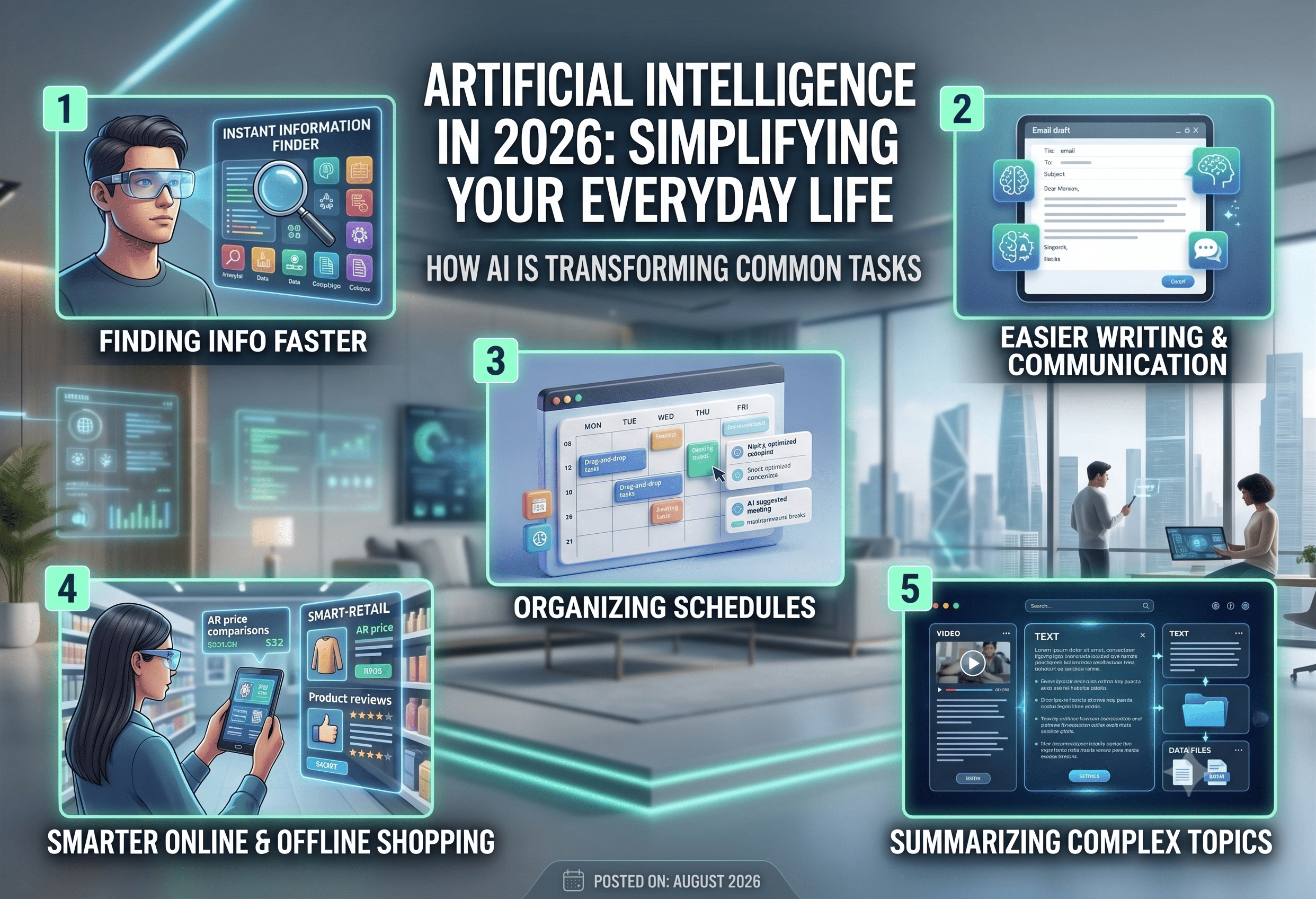
Artificial intelligence has quickly become one of the most influential technologies in the digital world. In 2026, AI is no longer something used only by technology companies and researchers. It is increasingly becoming part of everyday life.
From writing emails and organizing schedules to shopping online and finding information, AI-powered tools are helping people complete common tasks faster and more efficiently.
Here are some of the biggest ways artificial intelligence is changing everyday life in 2026.
1. AI Helps People Find Information Faster
Searching for information online has traditionally required users to visit several websites and compare different sources.
AI-powered assistants can make this process faster by helping users summarize information, explain complicated topics, and organize research.
Instead of spending a long time searching through multiple pages, users can often get an overview of a topic within minutes.
However, important information should still be verified using reliable sources.
2. Writing and Communication Become Easier
AI writing tools are becoming increasingly useful for everyday communication.
People can use these tools to draft emails, improve grammar, summarize documents, translate text, and generate ideas.
Businesses can also use AI to help prepare reports, product descriptions, customer responses, and other routine content.
These tools do not completely replace human communication, but they can significantly reduce the time required to create and edit written content.
3. AI Can Improve Daily Productivity
Managing multiple tasks can be difficult, especially for people who work online.
AI-powered productivity tools can help organize information, create task lists, summarize meetings, and suggest priorities.
Some digital assistants can also help users plan schedules or turn large projects into smaller tasks.
By automating repetitive activities, people can spend more time focusing on work that requires creativity and decision-making.
4. Online Shopping Becomes Smarter
Artificial intelligence is also changing how consumers shop online.
E-commerce websites can use AI to recommend products based on browsing behavior, previous purchases, and customer preferences.
AI-powered shopping assistants may also help consumers compare products, understand specifications, and discover alternatives.
For shoppers, this can make it easier to navigate large online marketplaces containing thousands of products.
5. Customer Service Becomes Faster
Many companies are using AI-powered chat systems to answer common customer questions.
These systems can provide basic information about orders, accounts, products, and services without requiring customers to wait for a human representative.
More complicated problems may still require human support, but AI can handle many routine questions quickly.
This allows customer service teams to spend more time dealing with situations that require human judgment.
6. Smart Devices Become More Helpful
Artificial intelligence is becoming increasingly connected with smart devices.
Smartphones, speakers, security cameras, televisions, and household appliances can use AI to understand user preferences and automate certain tasks.
For example, smart home systems may adjust lighting or temperature based on routines.
As connected devices become more advanced, users may be able to manage more parts of their homes through a single digital assistant.
7. AI Makes Creative Tools More Accessible
Creative technology has also changed significantly.
AI tools can help users generate images, brainstorm ideas, edit videos, create presentations, and experiment with different designs.
This means people without advanced technical skills can perform tasks that previously required specialized software knowledge.
Professional designers and creators can also use AI to speed up repetitive parts of their workflows.
8. Privacy and Security Remain Important
The rapid growth of artificial intelligence also creates new concerns.
Some AI services require users to provide information in order to generate useful results. Users should therefore be careful about sharing passwords, financial information, private documents, or other sensitive data with unfamiliar services.
Businesses also need clear policies for how AI tools are used with company and customer information.
Understanding privacy settings and using trusted services can help reduce potential risks.
What Could Come Next?
Artificial intelligence will likely continue to become more integrated into websites, smartphones, productivity software, and online services.
Future AI assistants may become better at understanding context and helping users complete multiple connected tasks.
Instead of opening several different applications, users may increasingly interact with intelligent assistants that help coordinate their digital activities.
Final Thoughts
Artificial intelligence is becoming a practical tool for everyday life in 2026.
It can help people find information, communicate, organize work, shop online, use smart devices, and complete creative tasks more efficiently.
The biggest benefit of AI may not be replacing people. Instead, it may be its ability to simplify repetitive tasks and give users more time to focus on activities that require human creativity, experience, and judgment.
As AI technology continues to develop, learning how to use these tools effectively and responsibly could become an increasingly valuable digital skill.