
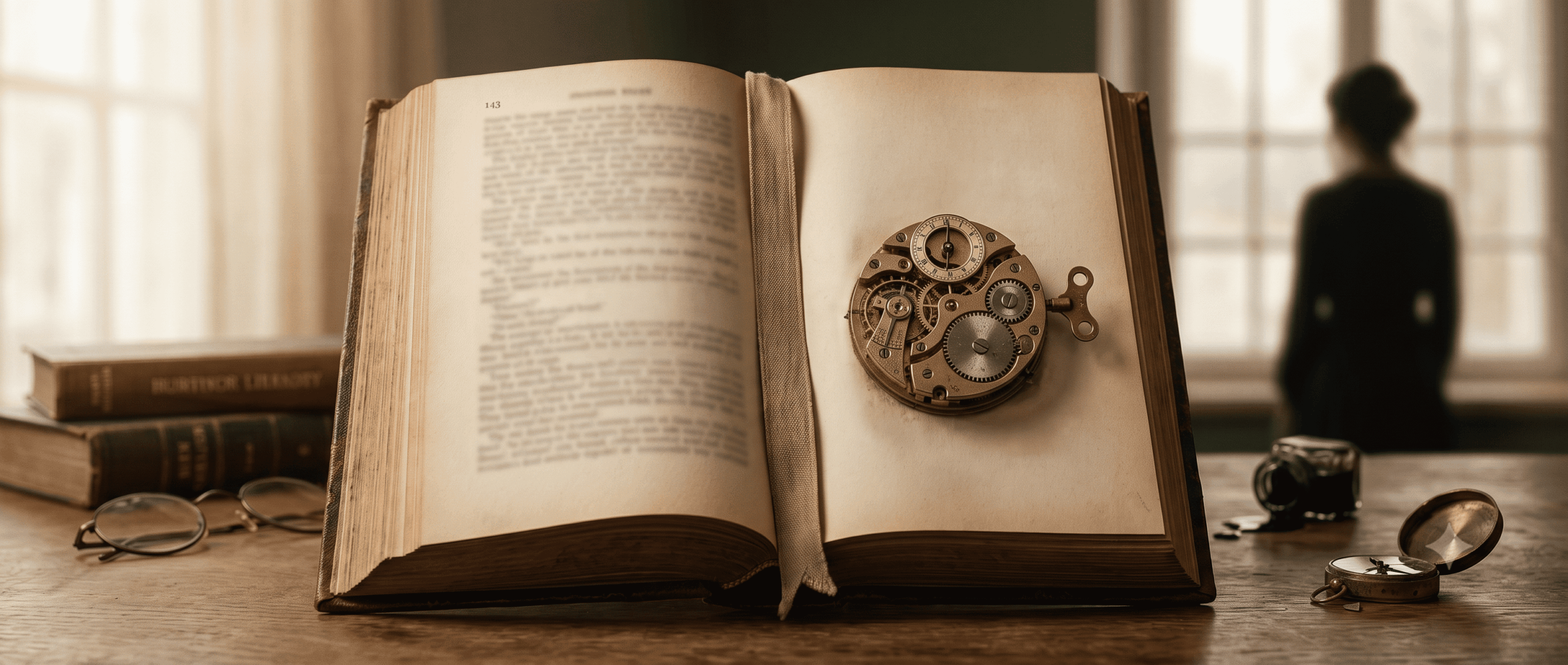
There is a bookmark halfway through a novel on your shelf.
It has been there for almost two years.
You remember buying the book. You remember someone telling you that the ending was extraordinary. What you cannot remember is the name of the main character or why you stopped reading on page 143.
Every so often, you notice it while looking for something else. The unfinished book feels like a small task you have neglected.
But perhaps you simply met it at the wrong time.
When we choose a book, we usually think about its subject. A mystery for a holiday. A biography because we admire the person. A novel because the cover caught our attention in a shop.
We give less thought to what we are bringing to the encounter.
A week full of interruptions can make a complicated story difficult to enter. After spending all day making decisions, you might have little patience for a narrator who takes twenty pages to walk across a room. During a lonely month, that same slow voice might feel like welcome company.
The words on the page stay where they are. Our attention arrives in a different condition each time.
Imagine reading a story about two sisters when you are seventeen. You follow the younger sister closely. Her impatience makes sense. You want her to leave home, catch the train, and begin the life she keeps describing.
Years later, you read it again.
This time, you notice the older sister standing in the kitchen after the departure. You wonder who will help her care for their father. A brief conversation you barely registered before becomes the scene you think about the next morning.
You can still understand the person who wants to leave. Now you also have questions about the person who stays.
Rereading can produce these quiet changes. A joke loses its charm. A minor character becomes interesting. A paragraph you once underlined seems so obvious that you feel slightly embarrassed by the pencil mark.
Then, a few pages later, you find another sentence that you somehow missed completely.
There is something pleasant about discovering that a familiar object still contains unfamiliar things.
Of course, returning to an abandoned book does not guarantee a revelation. You may reach page 143 again and remember exactly why you stopped. The dialogue may still irritate you. The story may still move too slowly for your taste.
You are allowed to close it.
Reading becomes an awkward pastime when every book turns into an obligation. Soon there is a queue, a target, a growing pile beside the bed. Choosing what to read starts to resemble answering overdue messages.
It can help to leave room for a less orderly reading life.
You might spend an evening with a collection of letters and never finish it. You might read one poem several times. You might return to a children’s story because you remember the illustration of a tiny kitchen inside a tree.
Those encounters can be satisfying on their own.
And sometimes, without much planning, an old book finds its moment.
You take it from the shelf while waiting for dinner. The bookmark falls out. Instead of searching for your place, you begin again at the first page.
The opening is different from what you remember. There is a dry little joke in the second paragraph. The setting comes into focus. A character you had forgotten says something that makes you pause.
Later, you carry the book into the kitchen.
Dinner needs another ten minutes.
For once, that seems like good news.