
Digital technology has become an essential part of modern life. From smartphones and online banking to artificial intelligence and smart home devices, technology influences how people communicate, work, shop, learn, and entertain themselves.
In 2026, digital services are becoming even more integrated into everyday routines. Many tasks that once required significant time or effort can now be completed within minutes.
Here are some of the biggest ways digital technology is changing everyday life in 2026.
1. Smartphones Continue to Become More Powerful
Smartphones are no longer used only for making calls and sending messages.
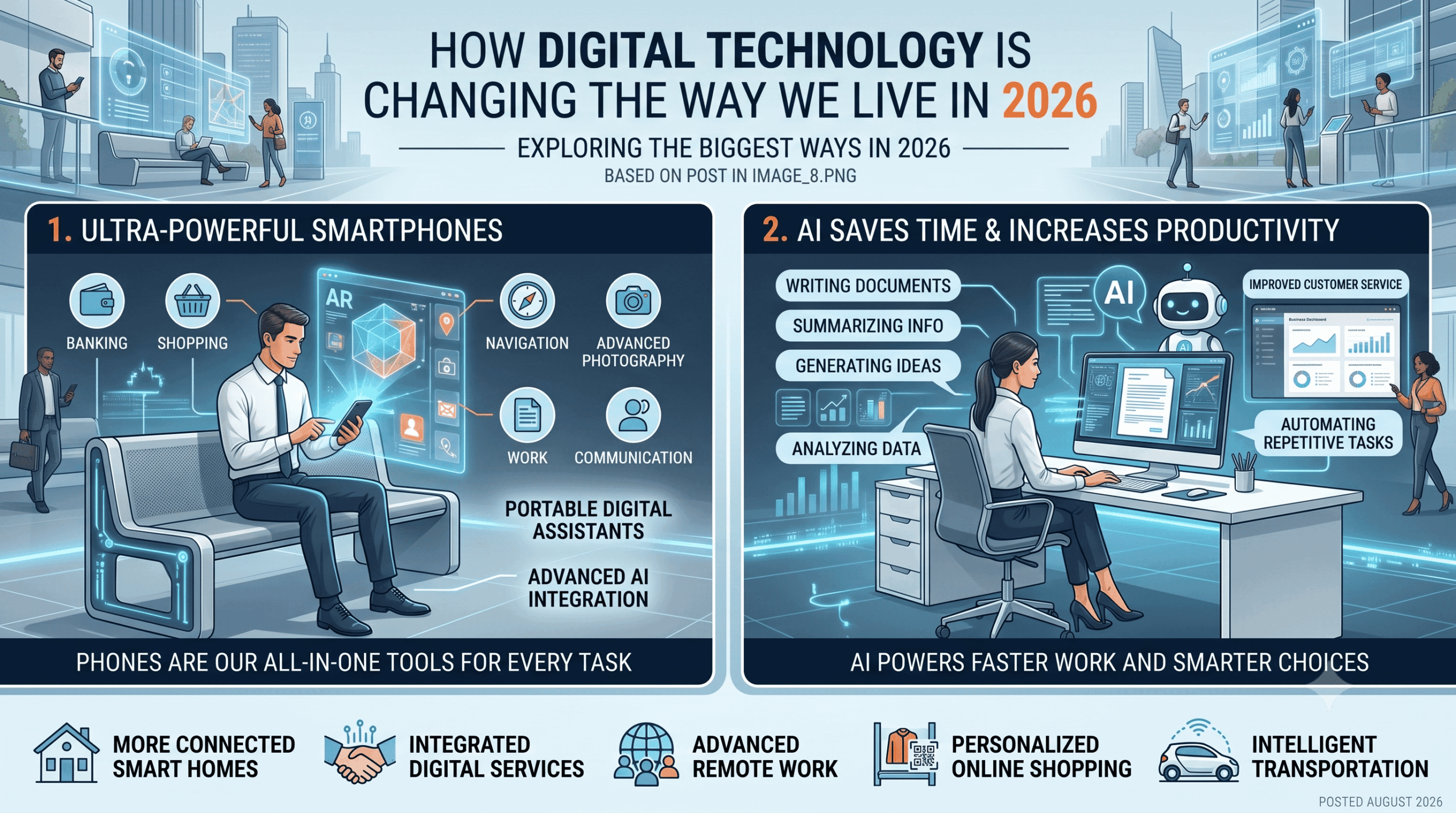
Today, people use their phones for banking, shopping, navigation, entertainment, photography, work, and communication.
Modern smartphones also include increasingly advanced artificial intelligence features that can help users organize information, edit photos, translate languages, and complete everyday tasks.
For many people, the smartphone has effectively become a portable digital assistant.
2. Artificial Intelligence Saves Time
Artificial intelligence is one of the most important technology trends of 2026.
AI-powered tools can help people write documents, summarize information, generate ideas, analyze data, and automate repetitive tasks.
Businesses are also using AI to improve customer service and productivity.
When used effectively, these tools can reduce the amount of time required for routine digital work.
3. Online Banking Makes Financial Tasks Easier
Digital banking has changed how people manage their money.
Instead of visiting a physical bank branch, customers can use mobile applications to check balances, transfer money, pay bills, and review transactions.
Digital wallets and contactless payment methods are also making everyday purchases faster.
However, users should always protect their banking accounts with strong passwords and additional security features when available.
4. Remote Work Creates More Flexibility
Technology has made it possible for many people to work from almost anywhere with an internet connection.
Video conferencing, cloud storage, messaging platforms, and project management tools allow teams to collaborate even when employees are located in different places.
Remote and hybrid work arrangements can provide greater flexibility for both businesses and employees.
At the same time, companies need effective communication and cybersecurity practices to support distributed teams.
5. Online Learning Becomes More Accessible
Education is becoming increasingly digital.
Students and professionals can access online courses, tutorials, digital textbooks, and educational videos from almost anywhere.
Artificial intelligence can also provide additional learning support by explaining difficult concepts or helping users practice new skills.
This gives people more opportunities to continue learning throughout their careers.
6. Smart Homes Become More Practical
Smart home technology is becoming easier to use and more affordable.
Connected lights, cameras, thermostats, speakers, and appliances can be controlled through smartphones or voice commands.
Some systems can automatically adjust settings based on a person’s routine.
For example, smart thermostats may reduce energy use when nobody is home and restore comfortable temperatures before residents return.
7. Entertainment Becomes More Personalized
Digital entertainment has changed dramatically over the past several years.
Streaming services allow users to access movies, television programs, music, podcasts, and other content whenever they want.
Recommendation systems can suggest content based on previous viewing or listening habits.
Gaming has also become more connected through online multiplayer services and cloud-based platforms.
8. Shopping Continues to Move Online
Online shopping remains an important part of the digital economy.
Consumers can compare prices, read product information, check customer reviews, and purchase products without visiting physical stores.
Artificial intelligence is making online shopping even more personalized by helping platforms recommend products based on user interests.
Faster delivery options and convenient digital payments are also improving the overall shopping experience.
9. Cybersecurity Becomes an Everyday Responsibility
As more activities move online, cybersecurity becomes increasingly important.
Phishing emails, fake websites, malicious downloads, and stolen passwords can put personal information at risk.
Users can improve their security by creating unique passwords, enabling two-factor authentication, updating their devices, and avoiding suspicious links.
Even simple security habits can help prevent many common online threats.
10. Privacy Becomes More Important
Digital services often collect information to provide personalized experiences.
This makes it important for users to understand what information they share online.
Checking privacy settings, limiting unnecessary application permissions, and choosing trustworthy services can help users maintain greater control over their personal information.
Companies also face growing expectations to handle customer data responsibly.
What Will Digital Life Look Like in the Future?
Technology will likely become even more integrated into everyday activities.
Artificial intelligence may become a standard feature of smartphones, computers, vehicles, websites, and household devices.
Digital services may also become more connected, allowing people to complete complicated tasks with fewer applications and fewer manual steps.
The challenge will be finding the right balance between convenience, security, and privacy.
Final Thoughts
Digital technology is changing everyday life in many different ways.
Smartphones, artificial intelligence, online banking, remote work, smart homes, and digital services can make everyday activities faster and more convenient.
However, technological progress also creates new responsibilities. Users need to think carefully about cybersecurity, privacy, and how they use digital services.
As technology continues to develop in 2026 and beyond, people who understand how to use digital tools safely and effectively will be better prepared for an increasingly connected world.